Peterson, Evens and Emmanuel hatched their plan one night after another grueling day hunting food scraps and anything that could be repaired and sold to buy salt and oil. Ranging from 20 to 25, the three were figuratively and quite literally sick from the Truittier Waste Disposal Dump outside Haiti, the largest of its dumps, which contains everything you would imagine from a city of 11.5 million people plus stuff you wouldn’t like medical and human waste.
Their plan was simple. None of them had more than a 5 years of schooling, but they were wise and street smart, which is how they had survived into adulthood despite the absolute poverty they had experienced all their lives. The past years, basically since Hurricane Matthew struck with devasting consequences in 2016, had gotten progressively worse. Barricades block traffic and though originally constructed to serve as police checkpoints following the assasination of President Jovenal Moise in 2021, now serve more as medieval moats and markers demarcating gang territories. Food insecurity combined with corrupt police, military and devasting political instability, have resulted in marked increases in violence, the last month over 190 deaths from gang killings according to official reports. They knew the number was higher. Everyone knows someone who has been killed – this is not I knew someone who knows someone – these are brothers, cousins, neighbours. They were out of options, until the night they hatched their plan.
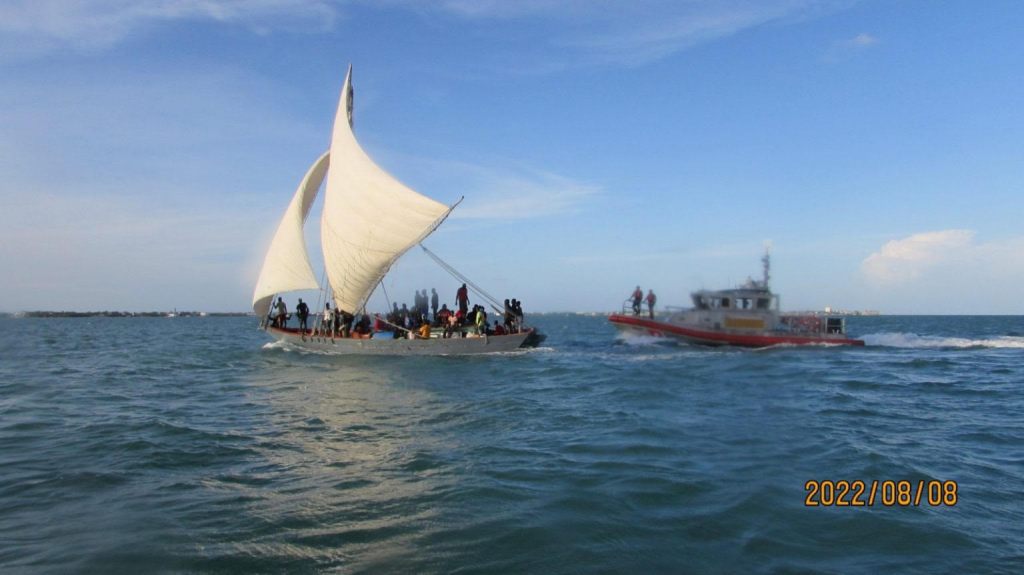
One week later, the theft of the the two masted sailboat from Port-Au-Prince saw not just 3 desperate young men, but 123 Haitians, so desolate, so desperate, so destitute, that they would risk their lives to sail blindly into the night, leaving more than 20 on the shore, and hundreds of family members behind in hopes of reaching the US. It would take them 6 days to travel over 1000 nautical miles. They had run out of food. The smell of urine, feces and dead fish parts would make the average American retch, but they endured this and unimaginably more all for the tiniest spark of hope of a new life, where they could work for pay and use the money for food. Peterson told the story over and over again of making $10 day laboring in America. They found it an unbelievable tale, but maybe, just maybe if it were true, that would be more money than they had earned in a month scavenging the toxic wastes of the Haitian landfill.
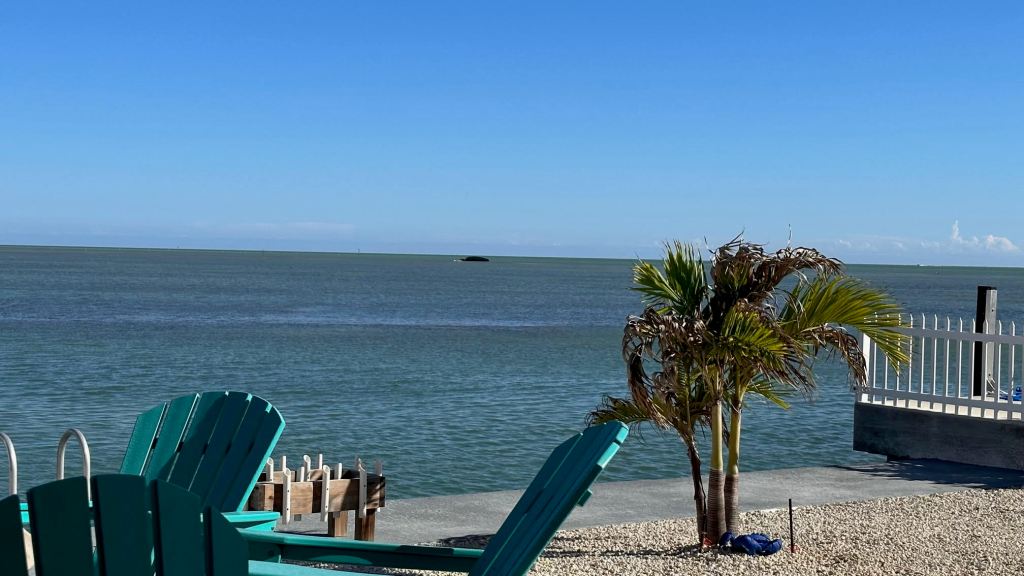
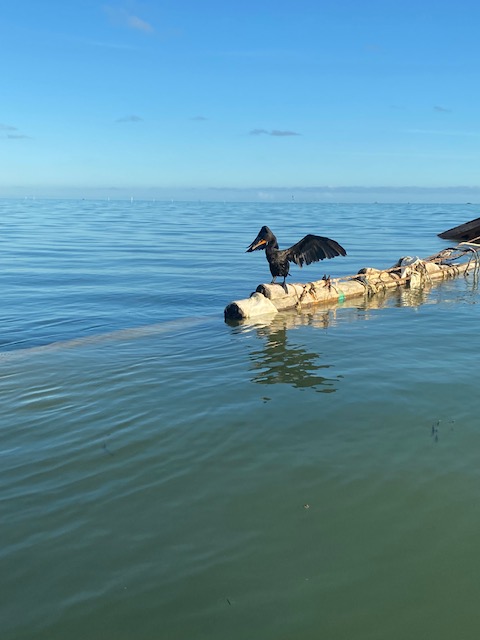
When we first arrived at Oceanview Gem, our house for January, with gentle ocean breezes caressing our skin instead of bitter frost threatening our fingers with frostbite, beyond one of the smaller palms, there was something in the water. Conjecture ensued as it often does with the clan, about what exactly the object is. “That’s not an island, because there is nothing growing on it.” “It has to be mand-made, but what are those standy-uppies on it?” I took a photo with my iPhone and then used the zoom feature. “I think those are birds and it looks like an overturned hull of a boat,” I offered. An hour or so later, as we watched some kayakers approach, it was our chance to fill in part of the mystery. If they were birds, they would surely fly away when the kayakers got close enough. If the kayakers climbed on it, it would have to be solid, like a rock outcropping or a structure for docking. The standy-uppies flew away, so they were birds, comorants actually, whose diving skills are legendary but as an evolutionary consequence, they lack the weather-proofing oil glands of most birds, so must sun themselves for hours to dry out their plumage after diving.
That evening, as the breeze evaporated and the stronger sunrays started giving up on the day, we took our two paddleboards (we also have three kayaks, lifejackets, paddles, a foosball table and an air hockey table in a little cubby we found on the back side along with bags and boards for cornhole), we made our way out toward the mystery structure.
The water was shallow all the way, never more than about 5 feet deep despite the distance. I saw a small hammerhead shark swimming under me and then along with me for about 10 feet. He was probably only about 4 feet, but his distinctive hammerhead was amazing. I know sharks terrify some people. They terrify me. I was 11 when my brother, who is 10 yrs older than took me to see Jaws in the theater. It was the Summer of 75. Every summer my family would make the several hours trek to Atlantic Beach where my uncle owned a mobile home trailer. I did not go into the ocean that year. Ankle deep was the best I could muster, so convinced I was that a Great White was looking for a tasty little morsel like me. Anyway, I know enough about Hammerheads to know this little guy was no threat, so we paddled on, but I was definitely more careful that my balance stayed true.
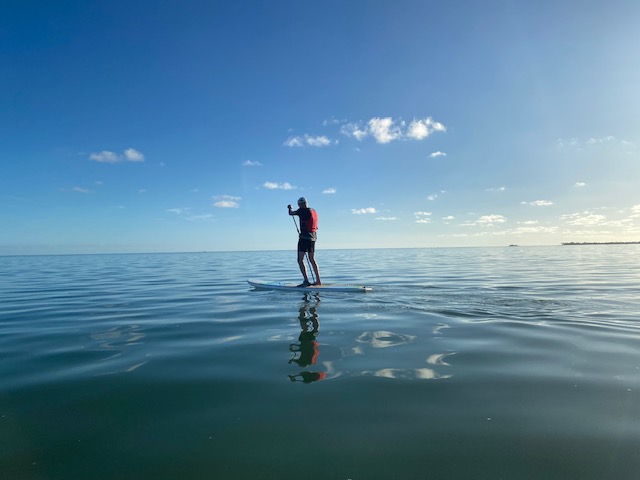
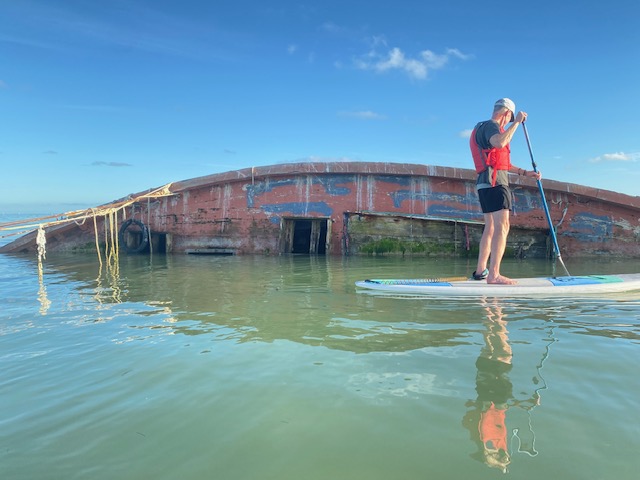
As we approached, it became clear. It was a wooden sailboat, but rather than an overturned boat, it was merely lying sideways, it’s long mast a site for comorants to dry, ropes from the now missing sail still lying alongside, now gathering a green mossy gloss.
Once we got really close and could see a small hull entrance about half the size of the attic stairs hole you probably stored your Christmas decorations in as a child, the odor emanating from the boat smelled like a dank alleyway of the homeless in San Francisco or London, a combination of urine, hidden feces and decay. There was bird guana on the side, but that is uric acid and has a different odor than mammal urine and feces. I backed away. The mystery was solved, but as we paddeled back, I wondered how it got there. Who ran it aground offshore and why was it still there? Why did it stink so badly? Would I make it all the way back without falling in and potentially falling prey to the hammerhead’s mother? Musings, nothing more. Musings of a month long tourist in the Keys, staying in a gorgeously appointed home on the ocean, equipped with our own paddleboards and kayaks.
The excitement on seeing land on day 5 was overwhelming, but there was also fear, fear of this promised land where maybe they could earn $10 a day working. Fear of a language they barely knew. Fear of the Coast Guard. Then the fear when they ran aground a half-mile from shore.
Peterson was the first to jump in, followed immediately by Evans and Emmanuel. So fitting, as these three young man were the leaders who hatched this scheme to risk everything – their lives included – with nothing but hope and a boat that was never designed to carry 123 souls. When it was clear the water wouldn’t consume them, and with a Coast Guard boat now approaching, another 90 jumped in and waded/swam to shore in Marathon. The others, those who could not swim, waited and were picked up by the Coast Guard. All were eventually rounded up and eventually processed through immigration as migrants seeking political asylum. All of them workers, not here for a hand-out, but for a chance at life, a life not dictated by the fear of gang death, not defined by scraps of food barely capable of sustain life, but a chance to work to live, maybe even enough money to some day send home. Peterson smiled when he was proven wrong, he could earn $10 an HOUR doing construction work, even more with overtime.
I learned to be just a little more grateful.
 Aventuras De Viaje
Leave a comment